Turning a conference booth into an interactive product to increase engagement

Role

Product designer
Design Lead
Illustrator
Animator
UX-researcher

Before

  • Standard booth format: conversations and product demos

  • Engagement depended on the booth staff

  • Difficult to scale for high visitor flow

  • Low product awareness among visitors

↓ Product awareness

Low scalability

After

  • Game-based format for offline events

  • Self-guided visitor engagement

  • Product discovery through gameplay

  • Memorable brand interaction

↑ Product awareness

↑ Visitor engagement

After

  • Game-based format for offline events

  • Self-guided visitor engagement

  • Product discovery through gameplay

  • Memorable brand interaction

↑ Product awareness

↑ Visitor engagement

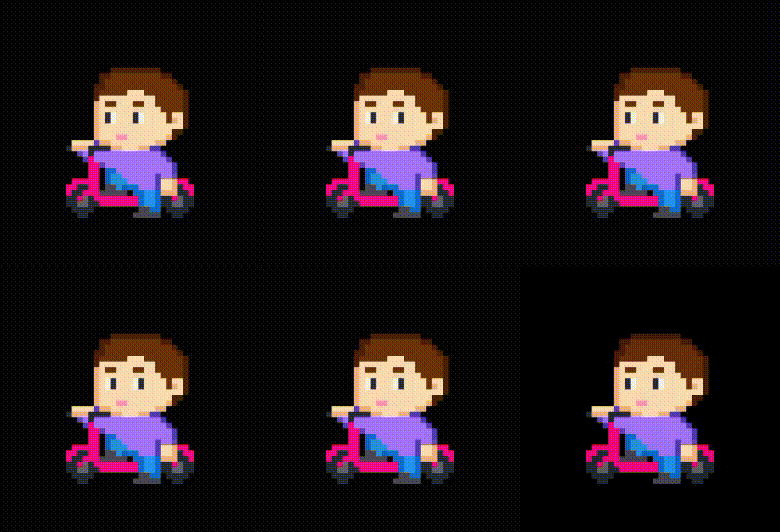
Gameplay video

About the product

An interactive game designed for Kontur’s conference booths

Context

At IT conferences companies engage visitors through booth activities.

The format is usually traditional: conversations, product demos, and activities run by the booth team.

Problem context

Business

  • Low awareness of some products

  • Engagement does not scale with visitor flow

  • Limited impact of conference participation

Product

  • Product experience is delivered through explanations rather than interaction

  • Engagement depends on booth staff

  • No self-guided interaction scenario

Hypothesis

A game-based booth experience will increase visitor engagement and product awareness

Work process

Role

I led the design of an interactive product experience for conference booths — from concept and research to implementation and launch

Product concept

  • defined the core product concept

  • designed some of the gameplay mechanics

  • integrated product messages into the game narrative

  • created the concept for the final boss and product references

Design leadership

  • established the design workflow and coordinated work across design, engineering, and game design

  • prioritized design work and decomposed tasks for implementation

  • ensured visual and interaction consistency across the product

  • served as the primary decision-maker for design direction

Game screens

Collaboration with engineering

  • aligned design decisions with technical constraints of the game engine

  • prepared structured implementation specs and change lists

  • supported development and participated in alpha testing

User research

  • observed how visitors interacted with the booth experience at major conferences

  • identified engagement patterns and friction points

UI, visuals and production

Designed and produced a significant part of the visual system:

  • game interface and interaction screens

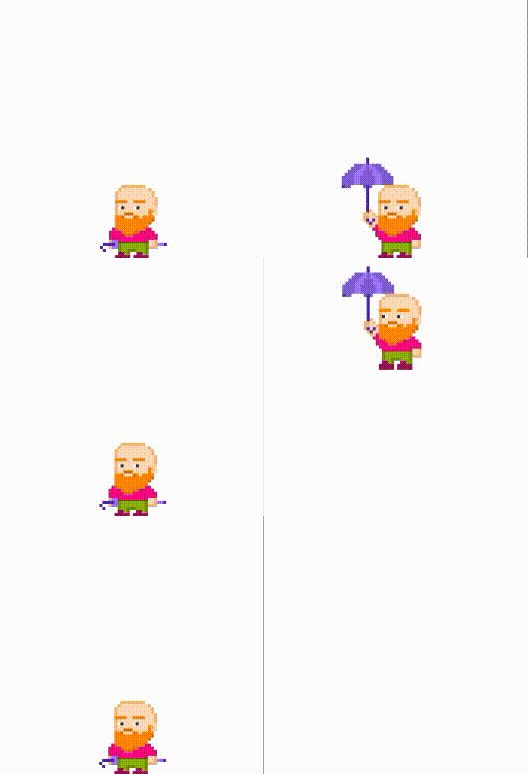
  • environments, characters, and assets

  • animations and visual feedback

  • special content for conference events

Also defined a scalable visual system for future game levels

Success metrics

I defined three groups of metrics to evaluate the booth experiment

1

Engagement

  • average interaction time at the booth

  • repeat game sessions by the same visitor

  • number of people waiting to play

2

Product recall

  • references to product mechanics in post-game conversations

  • percentage of players correctly recalling the embedded product

  • number of product-related questions after gameplay

3

Autonomousity

  • visitors starting the game without staff assistance

  • multiple players interacting simultaneously

  • ratio of players to booth staff

Field testing

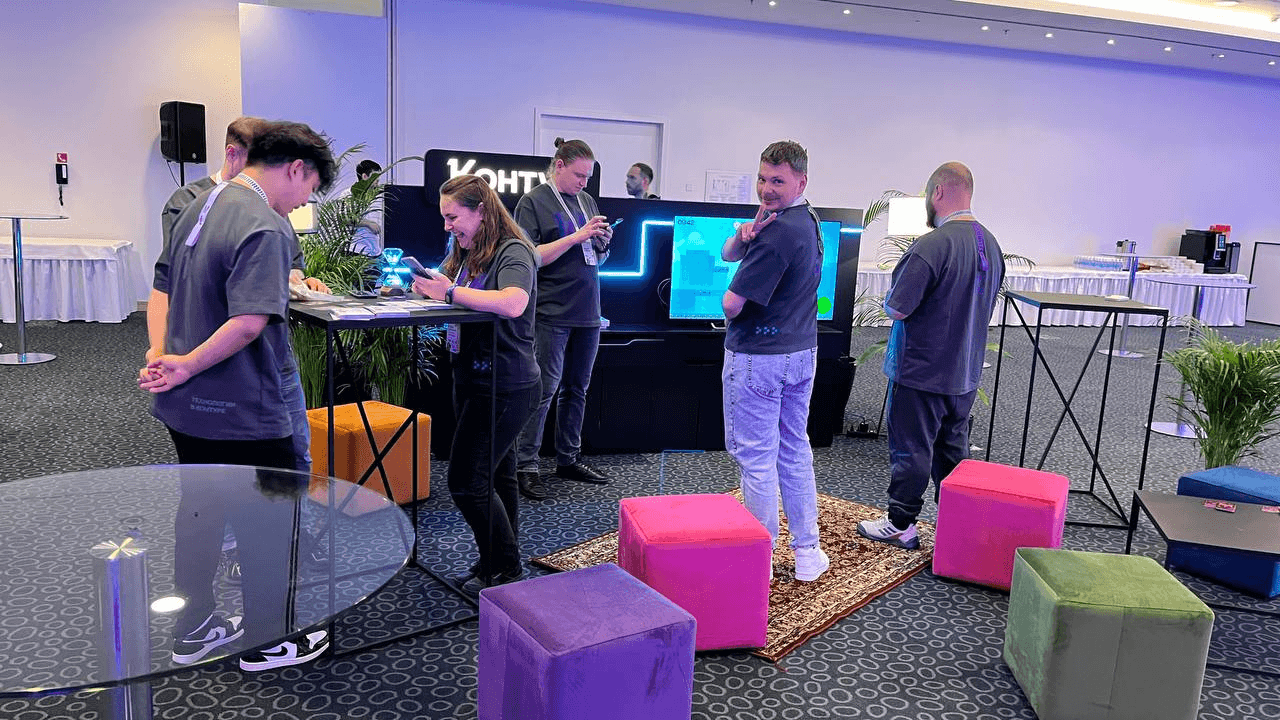
The game was tested at large IT conferences in real booth conditions.

To validate the hypothesis, we tested the interactive format at major IT conferences and tracked engagement, product recall, and scalability

Field research

My role

  • worked as a booth facilitator

  • observed visitor behavior and booth team interactions

What i observed

  • gameplay scenarios

  • reactions and questions

  • interaction with the leaderboard

  • feedback after gameplay

Results

1

Engagement

  • visitors spent 3–5 minutes at the booth vs typical 1–2 minute conversations)

  • many players returned to improve their score

  • a queue formed around the game screen

  • competitive behavior emerged around the leaderboard

2

Product recall

  • players discussed product boosts with each other

  • Kontur Talk was often mentioned as a gameplay tool

  • visitors asked product-specific questions after playing

  • participants brought colleagues to try the game

3

Autonomousity

  • multiple visitors played at the same time

  • some visitors started the game without booth staff assistance

Key takeaways

  • game-based interaction holds attention longer than traditional booth conversations

  • product concepts are remembered better when embedded in mechanics rather than presentations

  • the format scales: multiple people can interact simultaneously without booth staff

Result

The game became a self-guided engagement tool for conference booths

The format enabled

  • raising visitor engagement without increasing booth staff

  • reinforcing product understanding through gameplay

  • creating a memorable brand interaction

Observed behaviors

  • visitors competed for leaderboard positions

  • players discussed game mechanics with colleagues

  • participants recommended the game to others

  • visitors recalled specific product mechanics (e.g. the Talk boost)

Create a free website with Framer, the website builder loved by startups, designers and agencies.